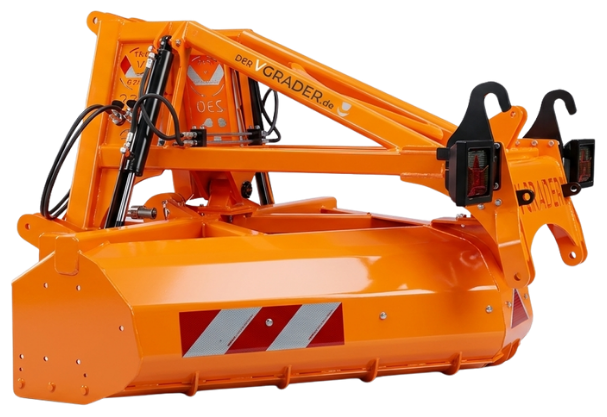
Not an update. A revolution. Newly engineered rather than patched up: Hardox 500 instead of standard steel, dual cylinders, lubricated joints, a clear view — and 2.30 m working width instead of 2.05 m.
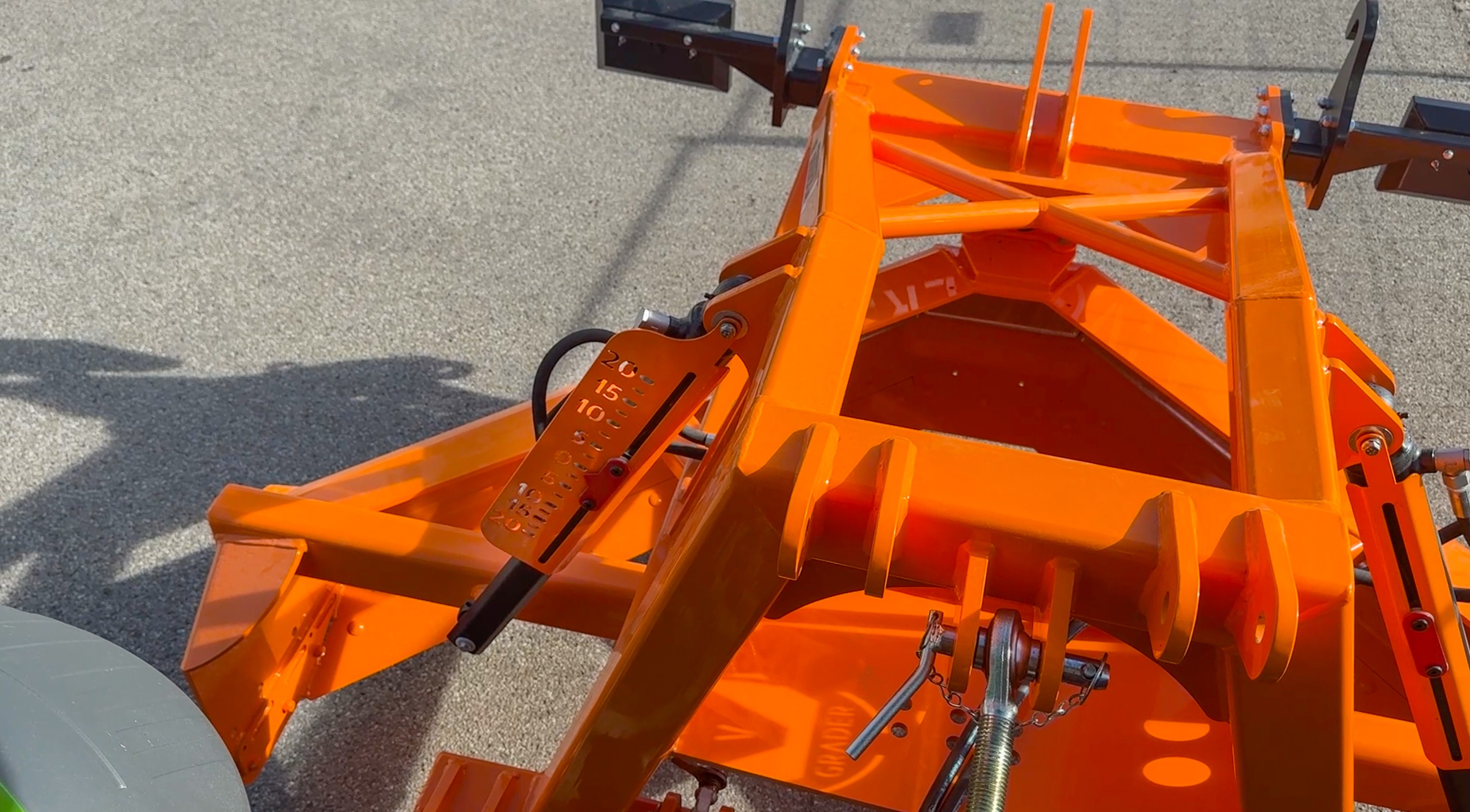
Easier on your neck and back: the tilt indicator is right in your line of sight — readable up to 20° of tilt without turning around. You see the blade and mounting points at a glance, a noticeable difference on long jobs.
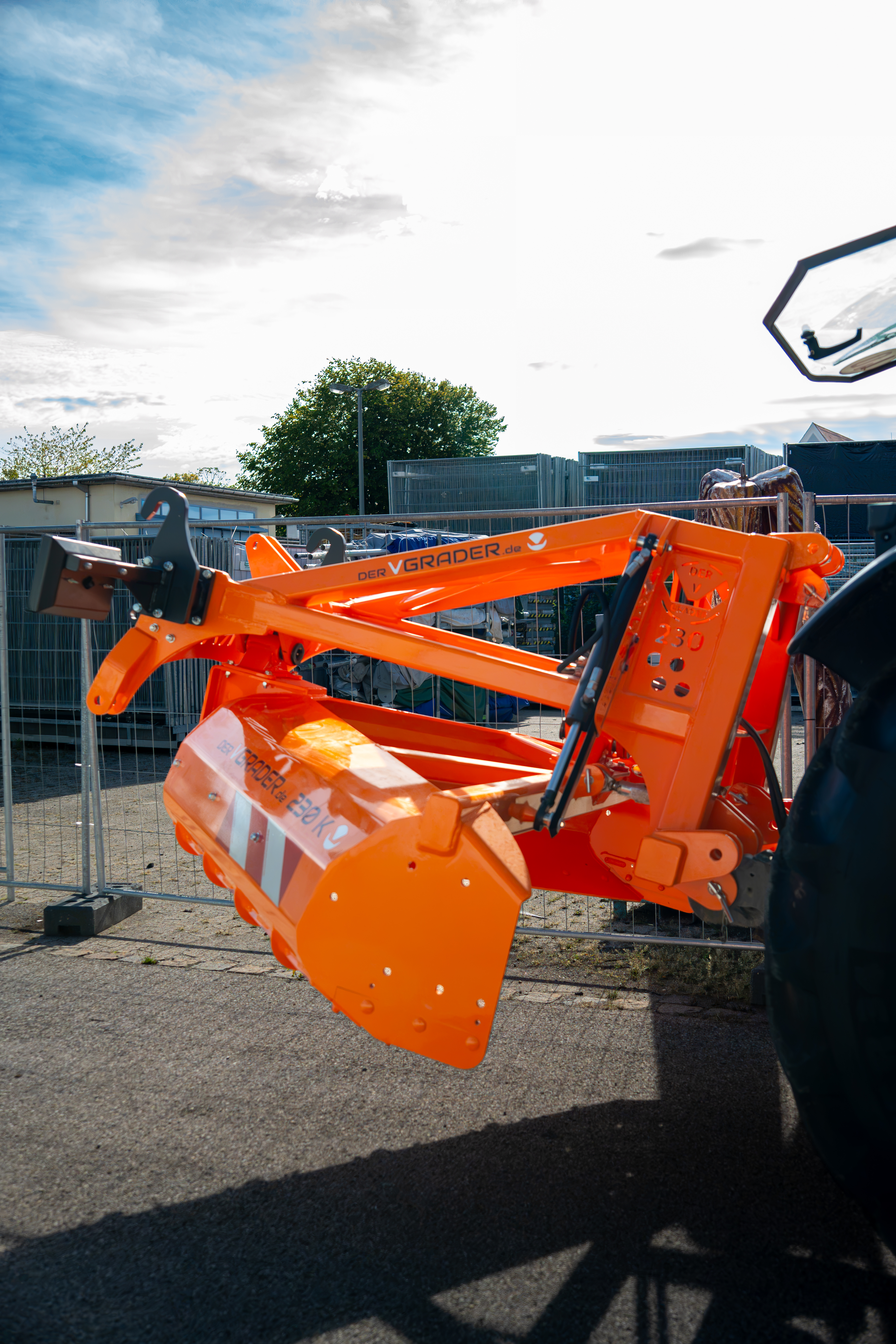
The open construction gives a clear view of the blade and mounting points — for more control when adjusting.
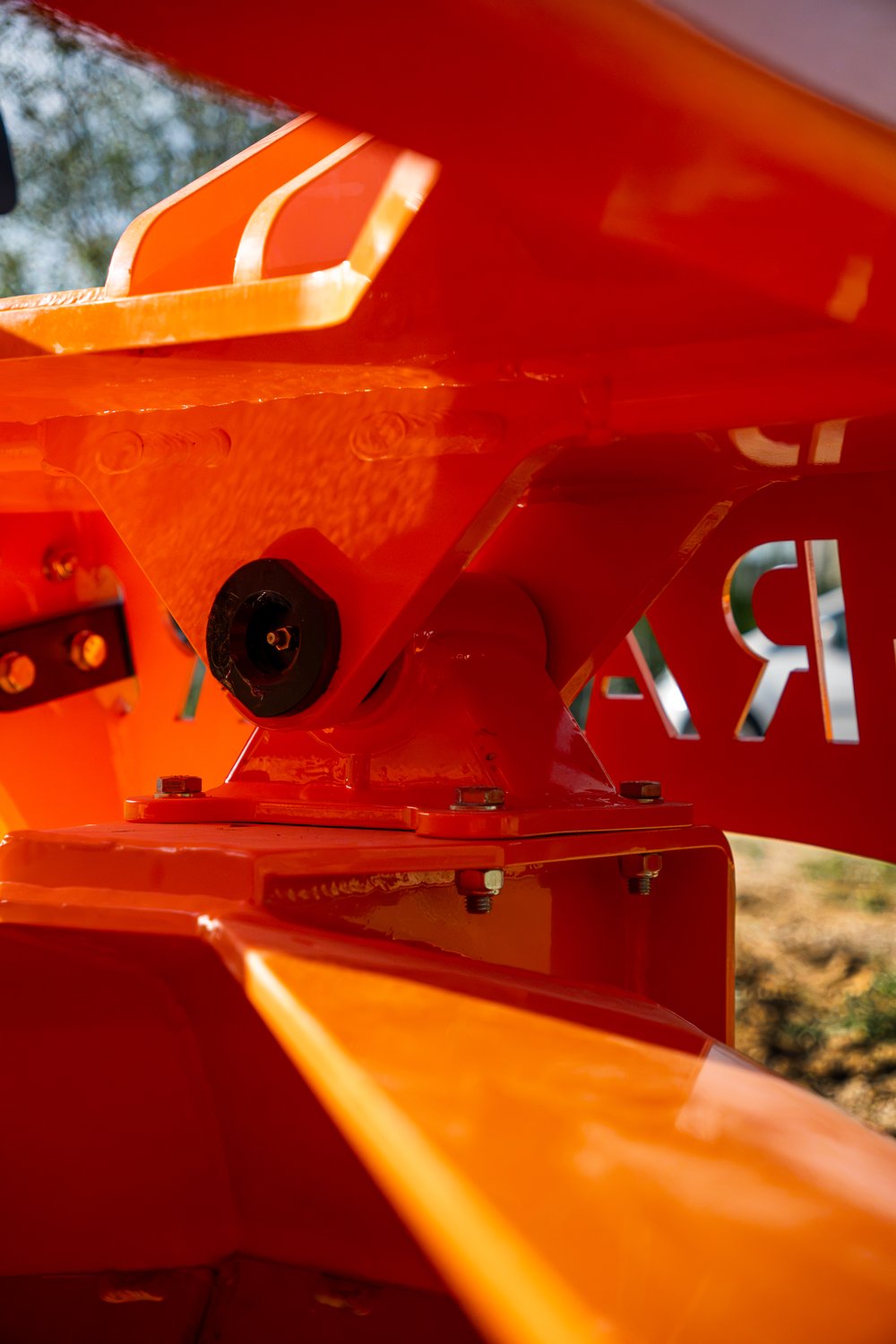
At the joint, a pivot bolt with a built-in grease reservoir lets the blade adapt smoothly to the contour of the ground — low-maintenance and without complicated readjusting, even on uneven terrain.
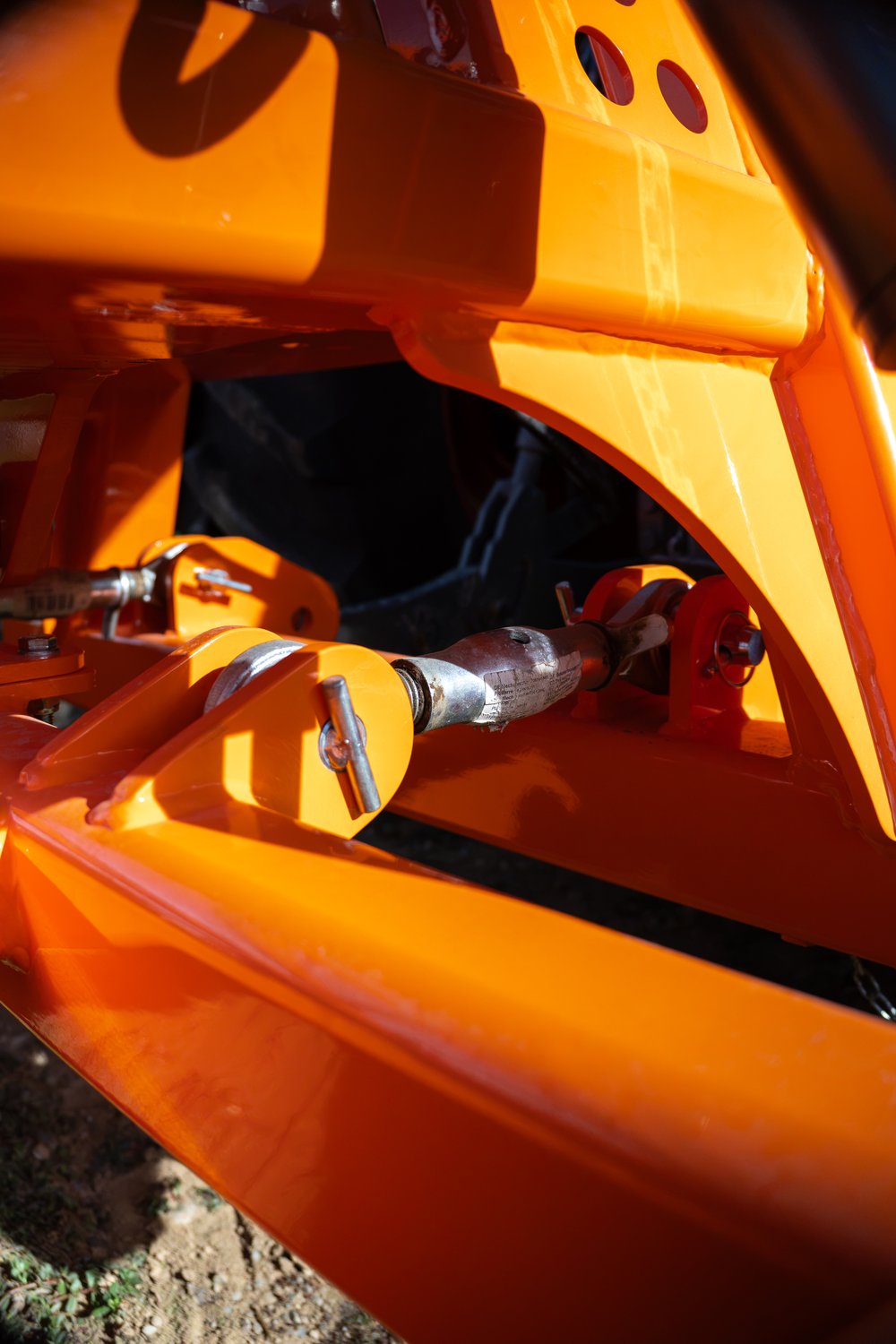
The top link connects the blade and frame directly — a simpler build, fewer wear parts.
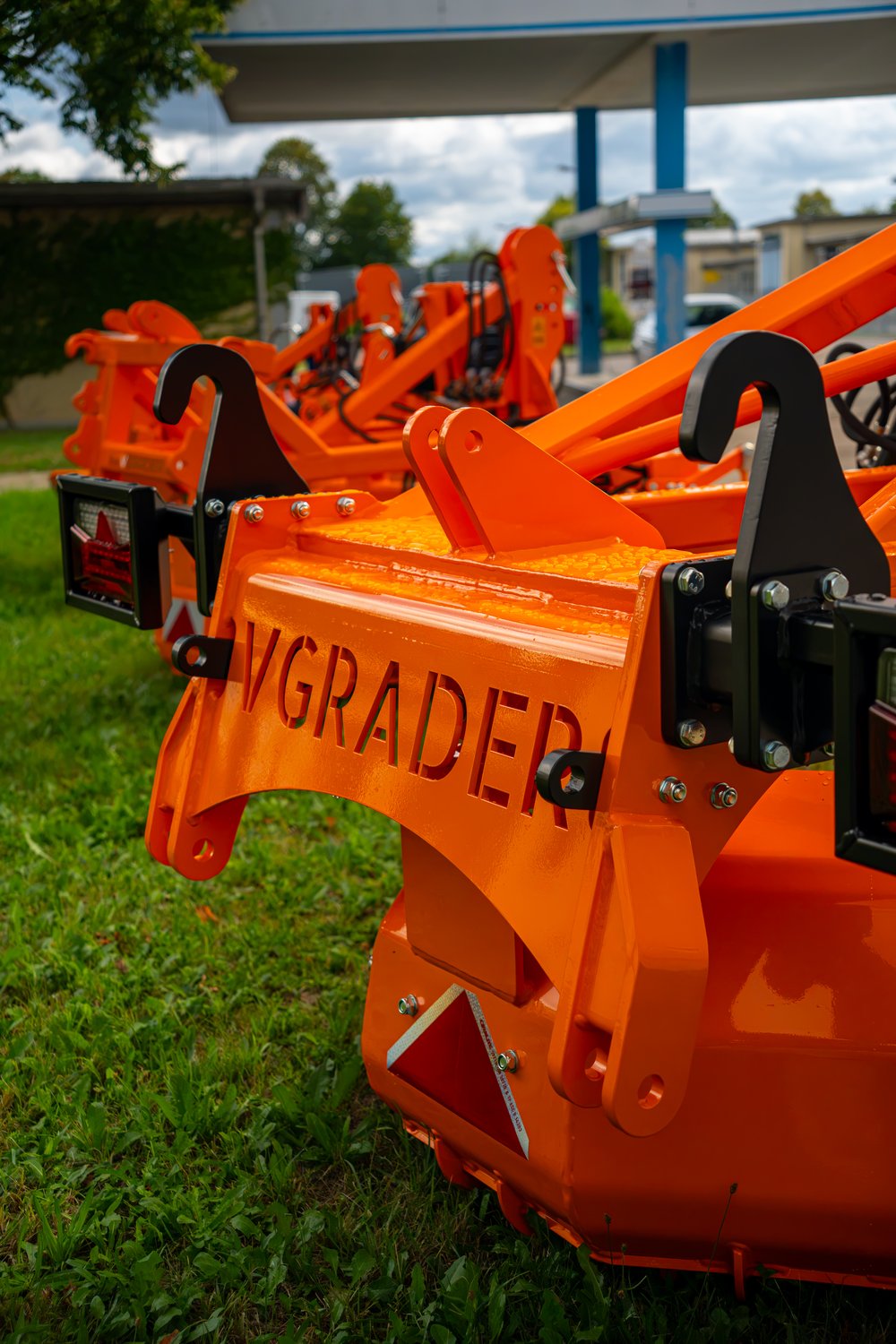
Removable, attachable and adjustable — matched to the lower links, instead of permanently fitted as on the previous model.
Not an update, a revolution — Hardox 500 instead of standard steel, dual cylinders, 2.30 m instead of 2.05 m working width, and 16 more points in detail.
The goal in use is to apply as little new material as possible. Many of the innovations — the guide plates above all — cut the material requirement in a targeted way.
Twelve tines rip open the surface before it's worked. That means tracks can be worked very effectively even when dry.
The V-blade 2.0 and the new ripper — maximum efficiency from the very first metres.
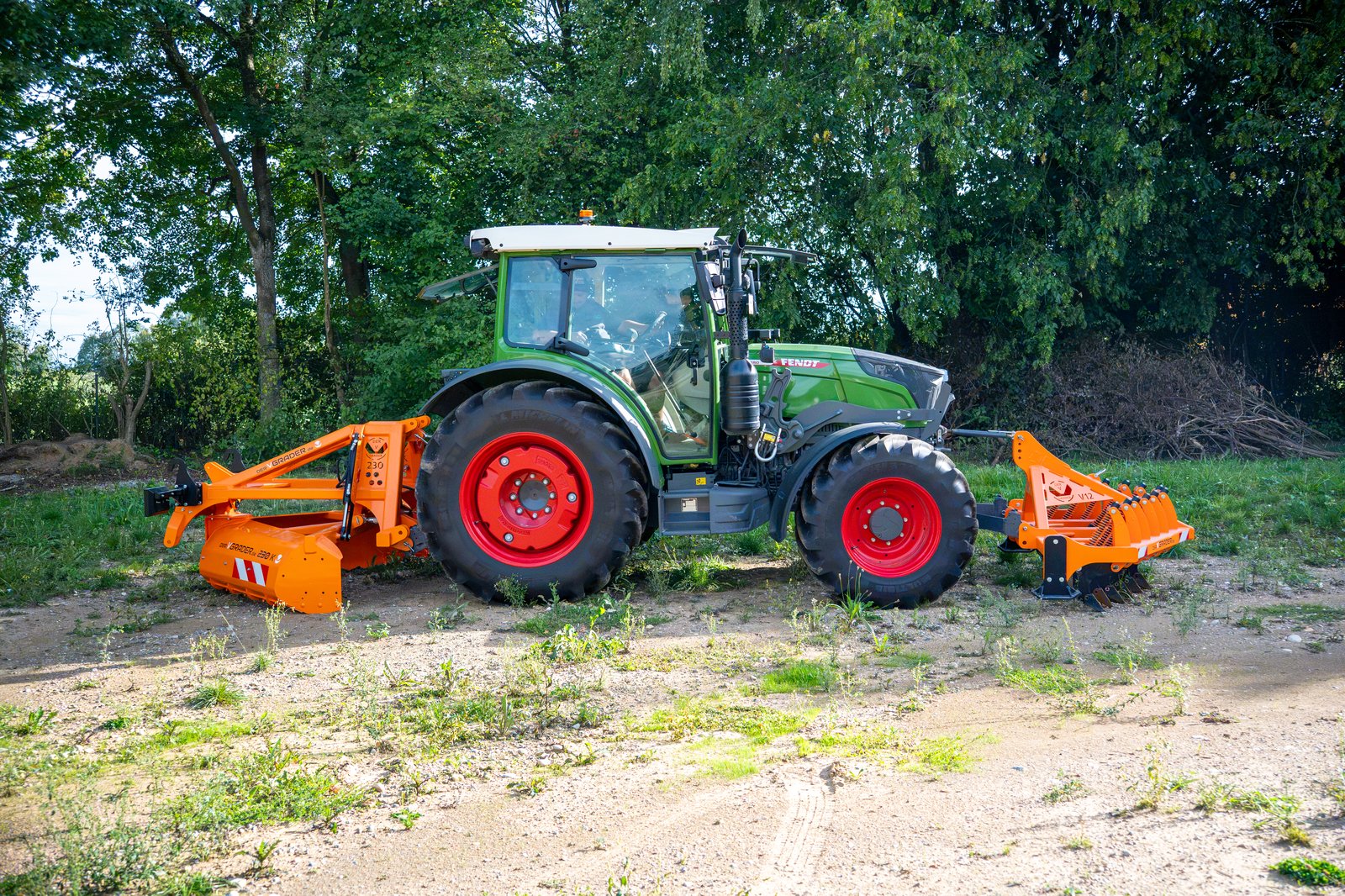
The VGrader 2.0 230K is the base — easily expanded depending on the job at hand.
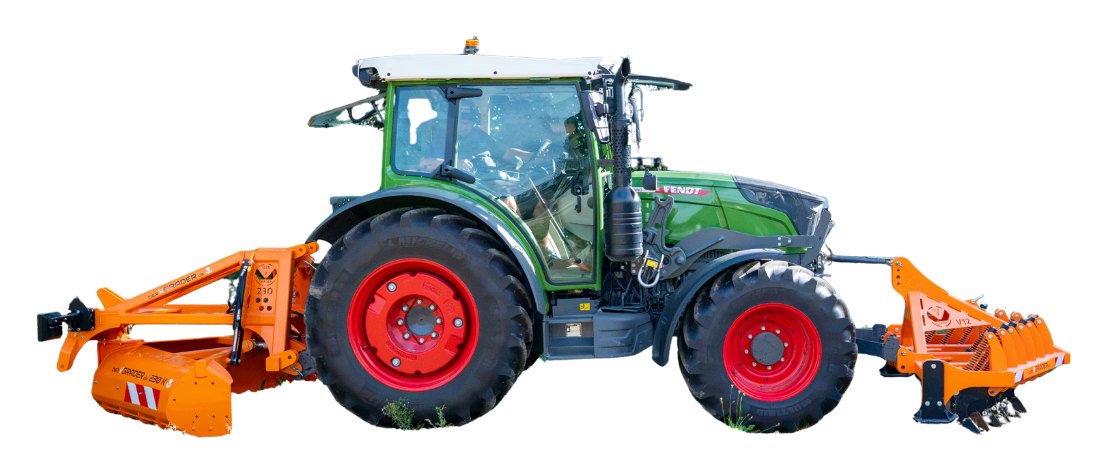
The combo at work: V12 ripper at the front, VGrader 230K at the rear — loosening and working the track in one pass.
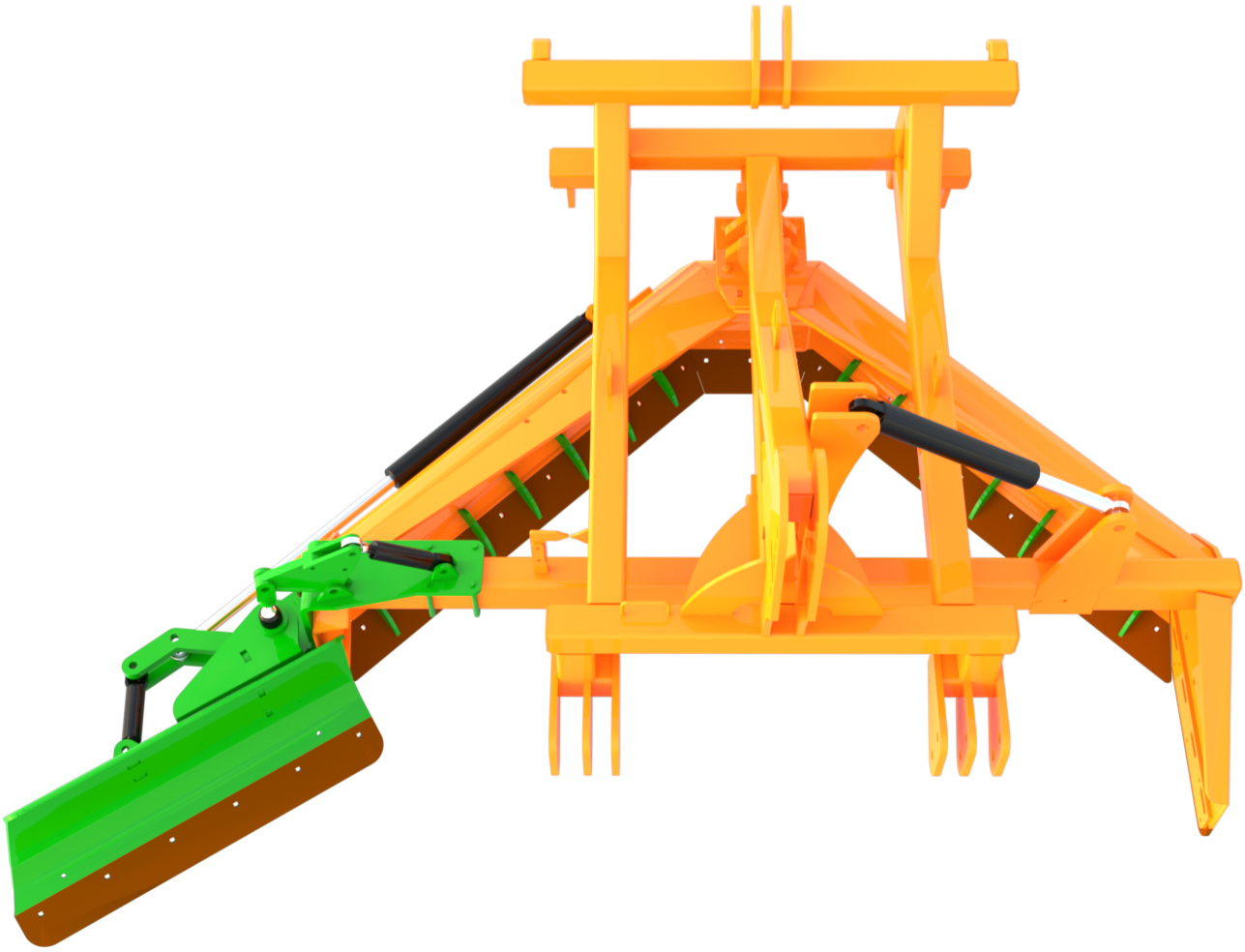
More control while driving.
Popular combo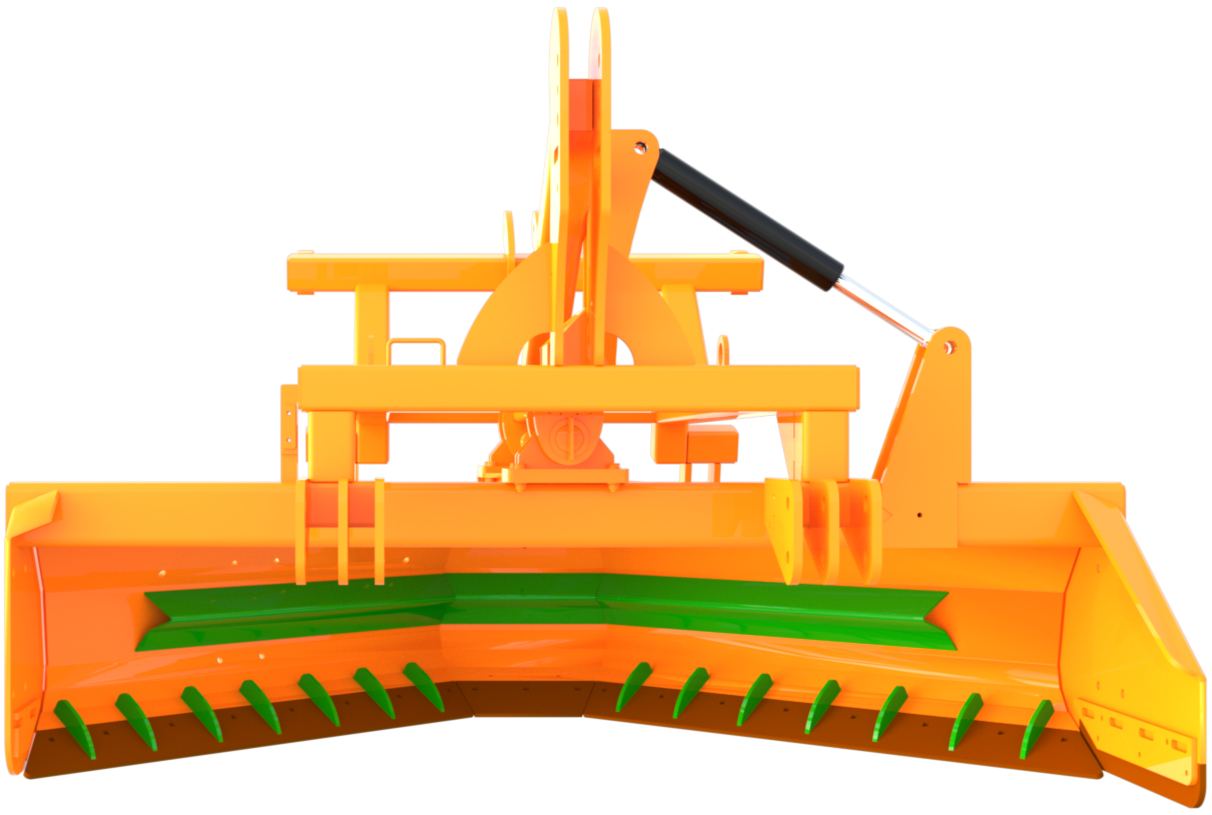
Around two-thirds less material.
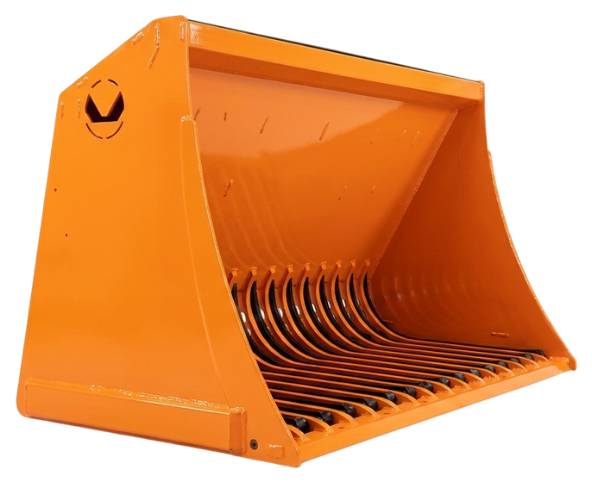
Screens out what needs to go.

Loosens compacted tracks.
Bankettschild 2.0 and the guide plates are especially often ordered together — combined, they deliver controlled edges and optimally distributed material.
