Anyone who maintains tracks, yards and roads every day knows: good equipment makes all the difference to efficiency, working time and results. The VGrader grew out of exactly that standard.
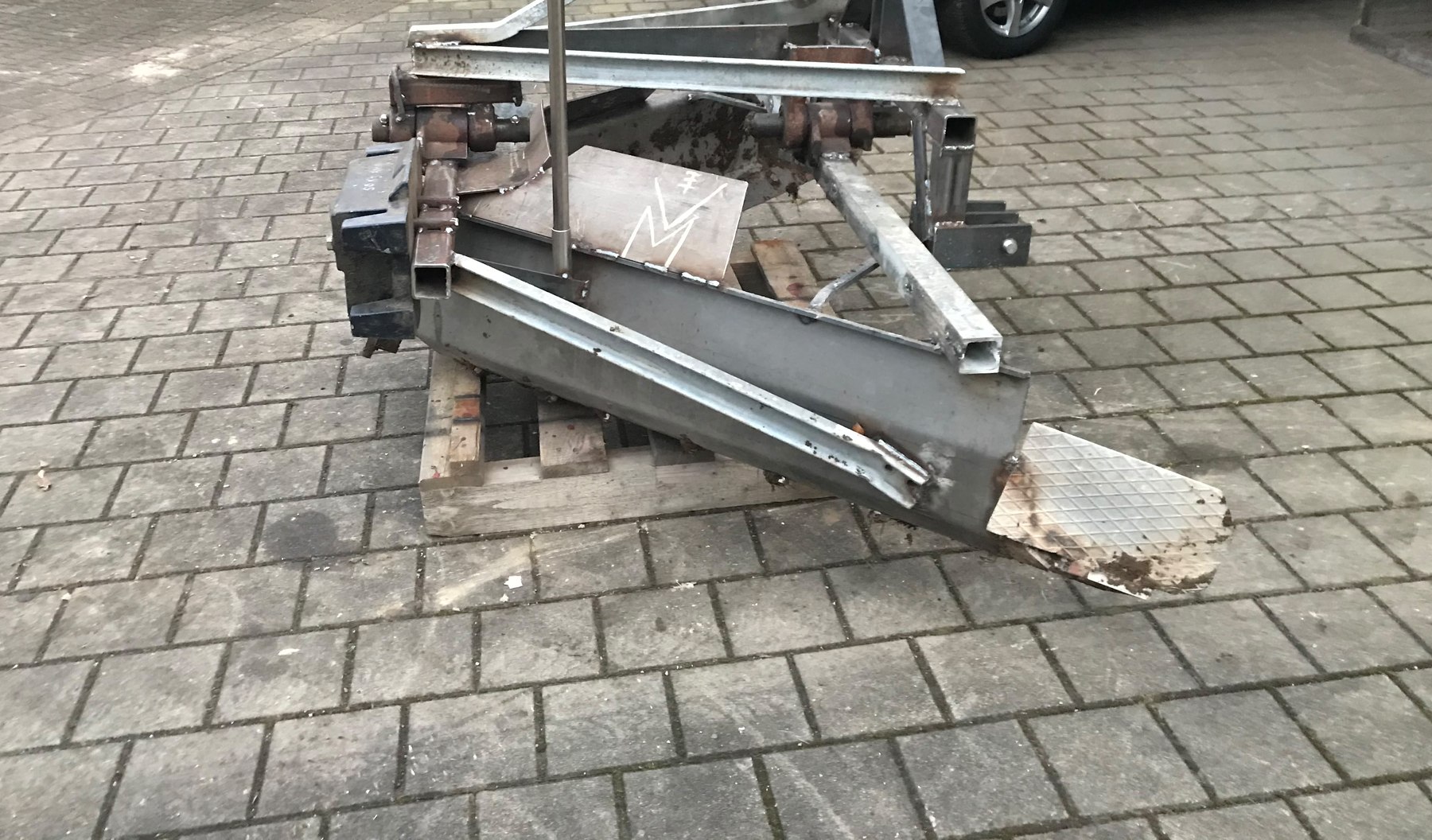 The first prototype
The story of our grader begins with more than 20 years of experience in municipal track building. With tracks that need regular maintenance, limited budgets, and one question: how can this work be done more simply, more quickly and with fewer resources?
When a friend came to me with his idea for a grader, my first thought was: that sounds sensible — why doesn't something like this exist yet? We had the idea checked out. Based on our research at the time, we couldn't find a comparable solution. So we decided to start building it ourselves.
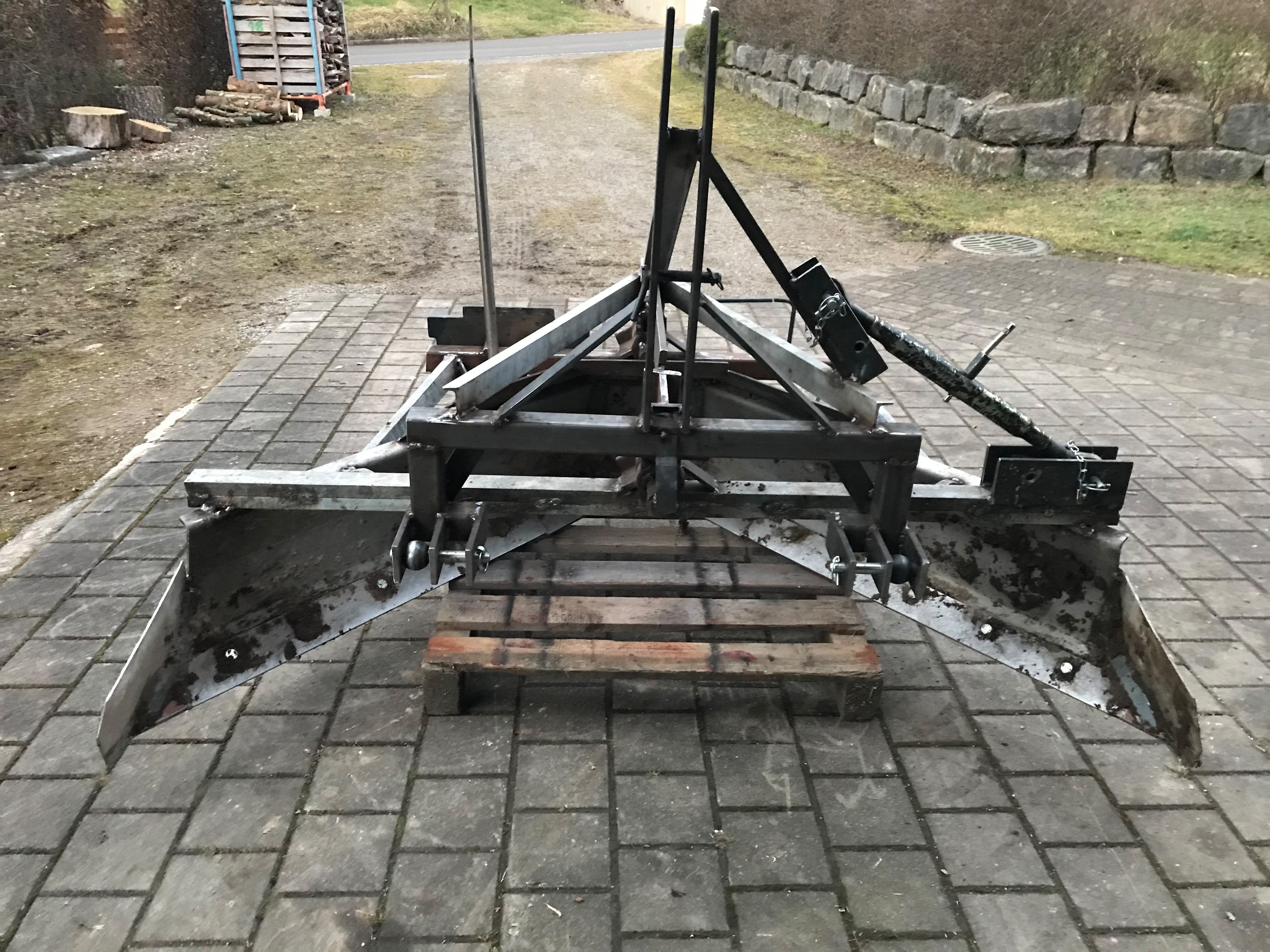
We founded our company and began building the first machines. From day one, real-world use showed that the basic principle worked.

Step by step, the first machines grew into a versatile system for track maintenance. We built the grader in three different working widths and added attachments such as a rear-mounted verge blade and an offset frame. Our customers were an important part of the development from the very start — we listened, asked questions and evaluated the results. Over six years, that built up a wealth of experience straight from the field.
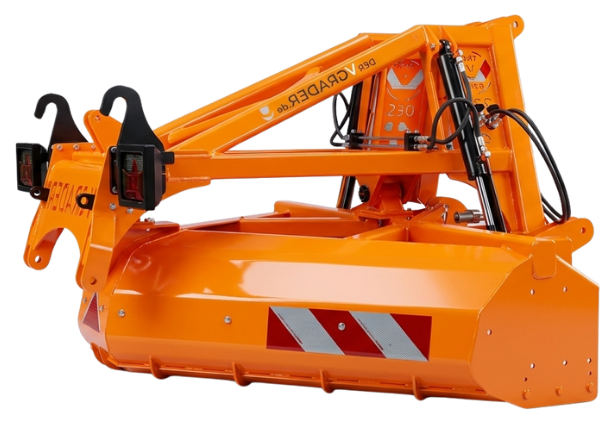
In 2026, I took over the development myself, to bring together our customers' experience and our own findings consistently in a new construction. That's how the VGrader 230K 2.0 came about — carrying the VGrader name since 2026, with 2.30 metres of working width instead of the previous 2.05 metres. The three-point linkage can also be shifted centrally or by 15 cm to the left or right, along with reinforced skid mounts, an integrated lighting system and a removable Euro mount.
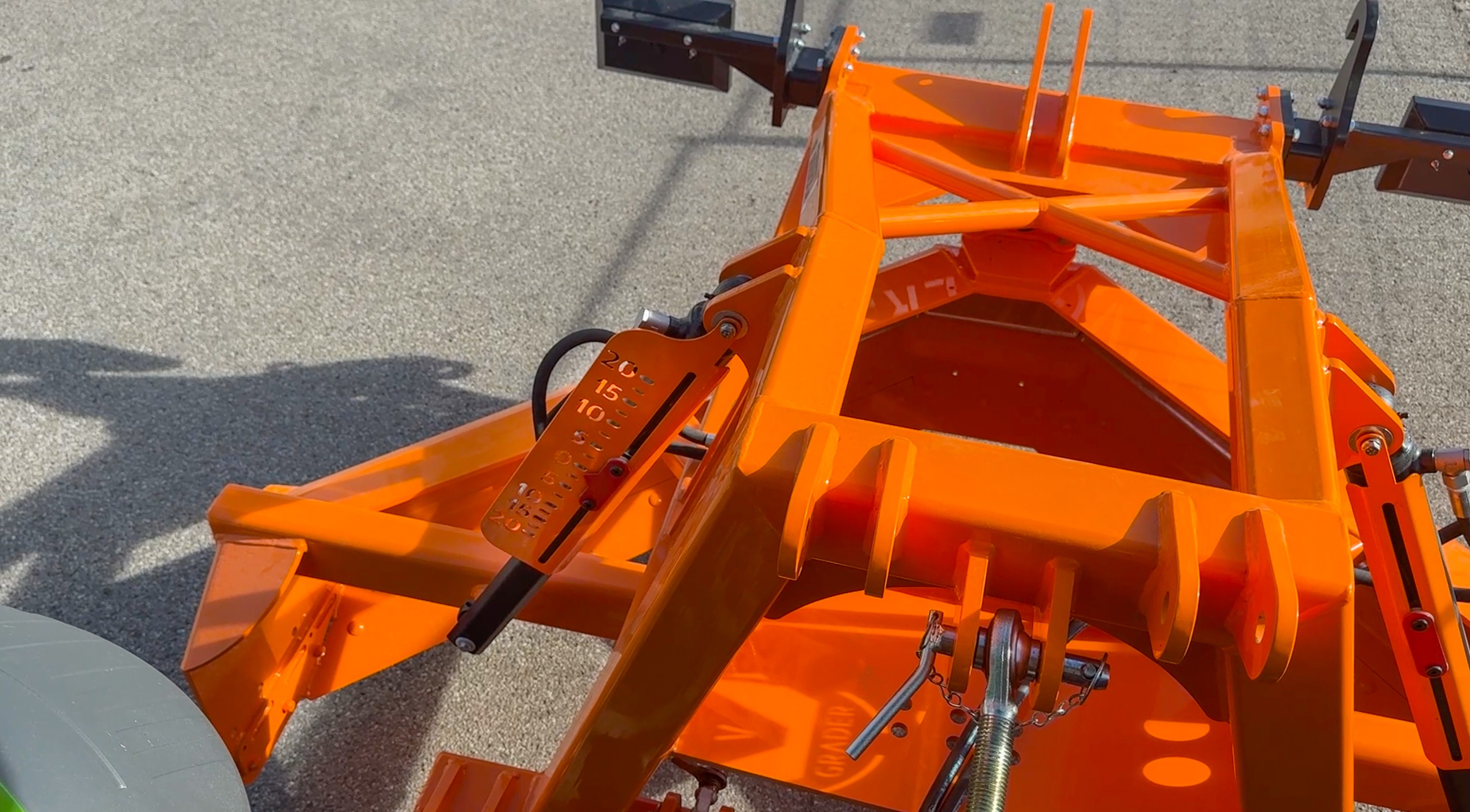
The open centre section gives a good view into the grader — the driver can see more clearly how the material is moving. The large tilt indicator sits on the right in an easily visible spot, can be read with less turning of the body, and protects the cylinders from flying stones. Two widely spaced cylinders replace the previous single one and allow adjustment of up to 20 degrees.
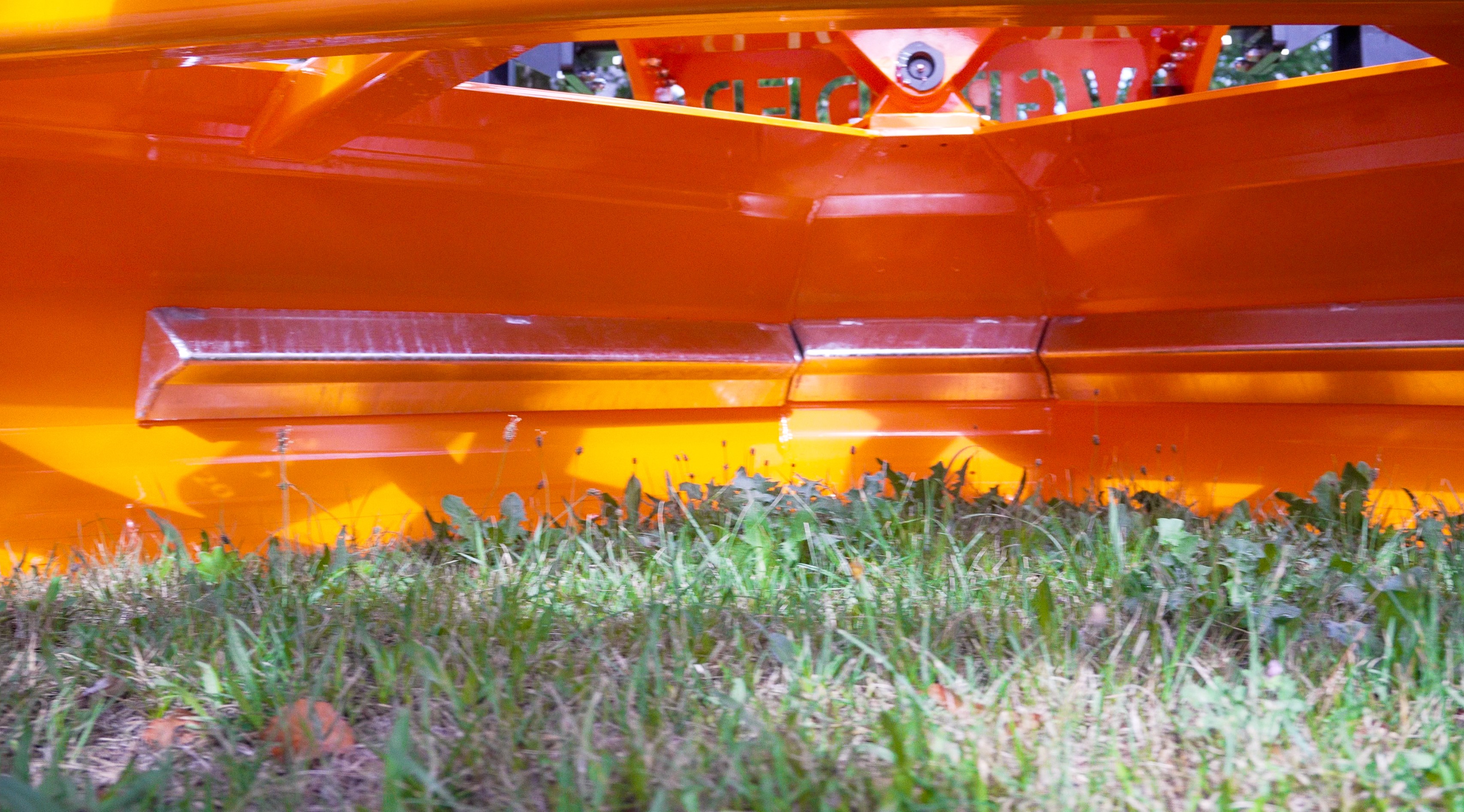
Until now, material tended to build up heavily in the middle of the V-blade first and only spread outward once there was enough of it. The new guide plates direct the material forward in a targeted way and encourage a rolling motion that spreads across the width early on. According to our comparison between generations, this way of working needs around two-thirds less material carried along to use the full width.
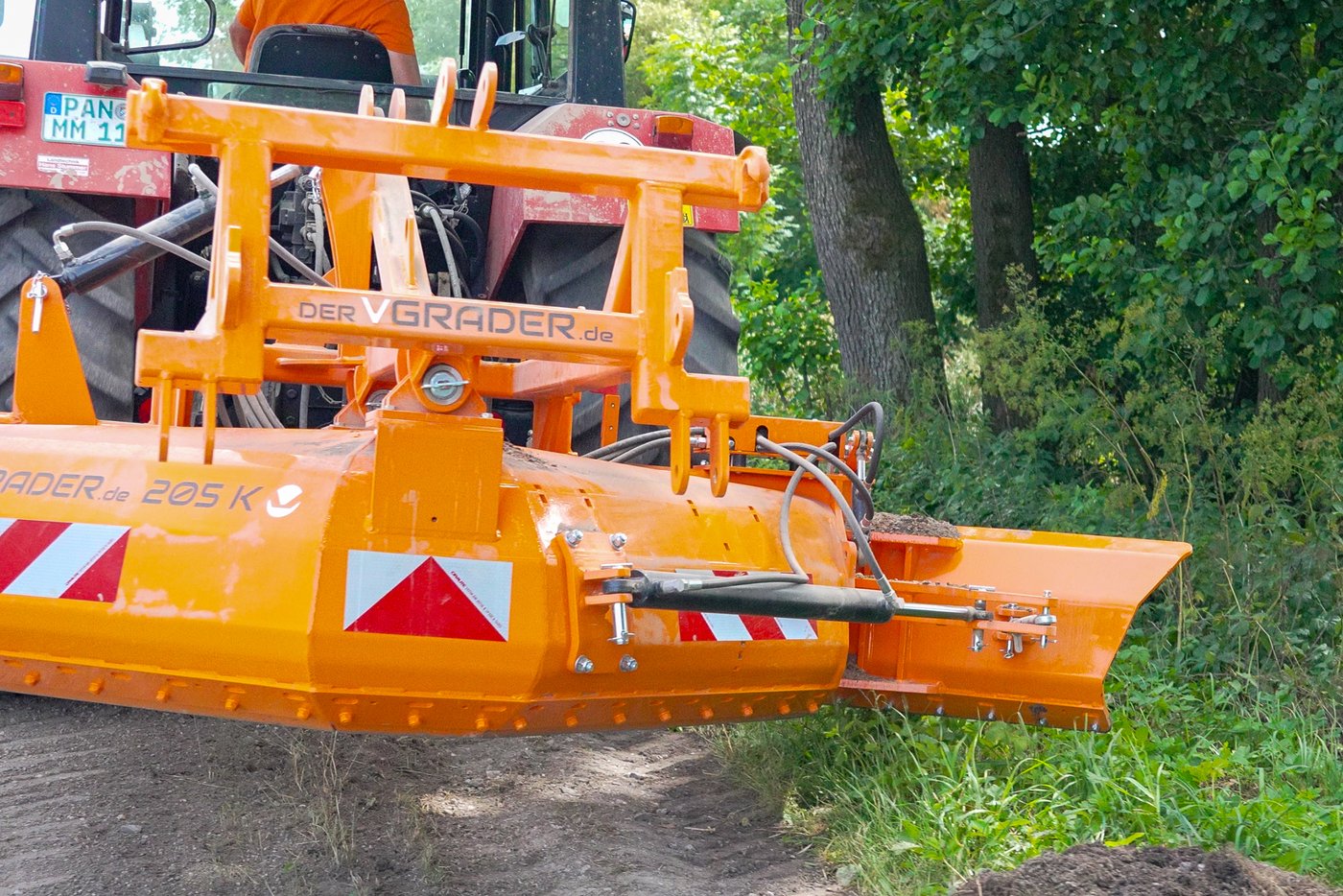
The Bankettschild 2.0 can clear material outward and bring suitable verge material back inward onto the track — without needing an offset frame at all. In the earlier arrangement, positioned far behind the tractor, the long lever arm noticeably affected handling. That's why the new blade sits as far forward as possible, close to the rear axle — supporting more stable, more accurate tracking, and reaching up to 80 cm beyond the tractor's outline depending on the setting.
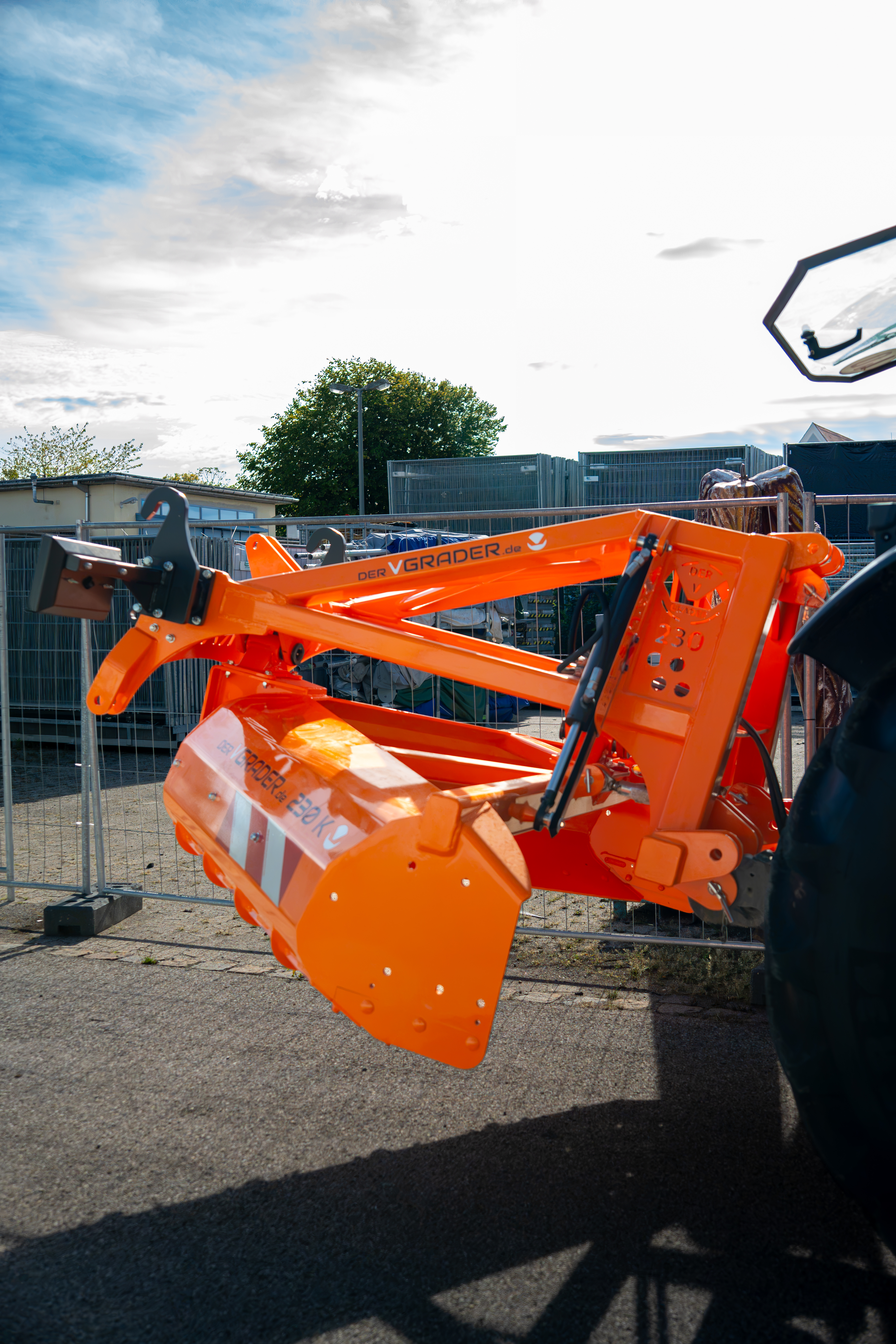
Experience with high lateral loads prompted a new force path: pulling force from the lower links is now routed directly through the joints to the blade, instead of via the upper frame as before. As a result, the machine runs noticeably more smoothly and has gained many times the stability. We also make all permanently welded hitch mounts from Hardox 500, with bolts made of the softer ST32 — wear is meant to occur preferentially on the cheaply replaceable bolt, not on the permanently fitted mount.
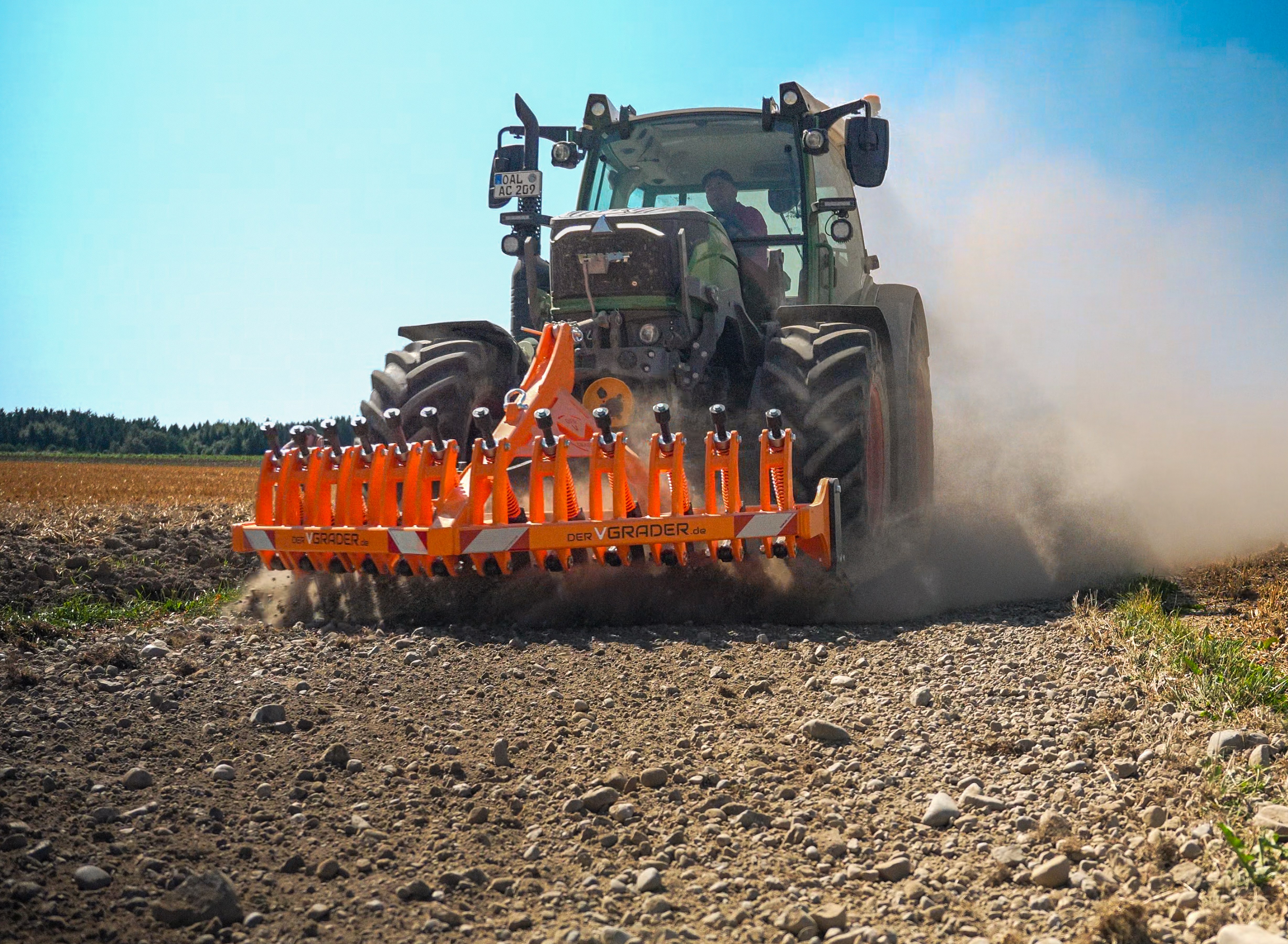
The wish for a ripper came from our customers — at first I was sceptical, since a deep-working cultivator didn't fit our high working speed. What we needed was a solution that would loosen hardened material without digging deep into the base. That's how the V12 came about, with twelve spring-mounted tines: at the front it loosens the surface, and behind it the VGrader picks up the loosened material, mixes it and spreads it — especially valuable on dry, hard tracks.
From the first grader in 2020 to the VGrader 230 K 2.0, our development follows the same idea: look closely, take experience seriously, and solve concrete tasks more simply.
Our customers provide valuable input for this. Their feedback leads to improvements that count in daily use: better visibility, simpler operation, targeted material flow, a more robust construction and more versatile attachments.
The idea came from more than 20 years of municipal experience. The next generation came from six years of customer experience. And practical use remains our benchmark.
